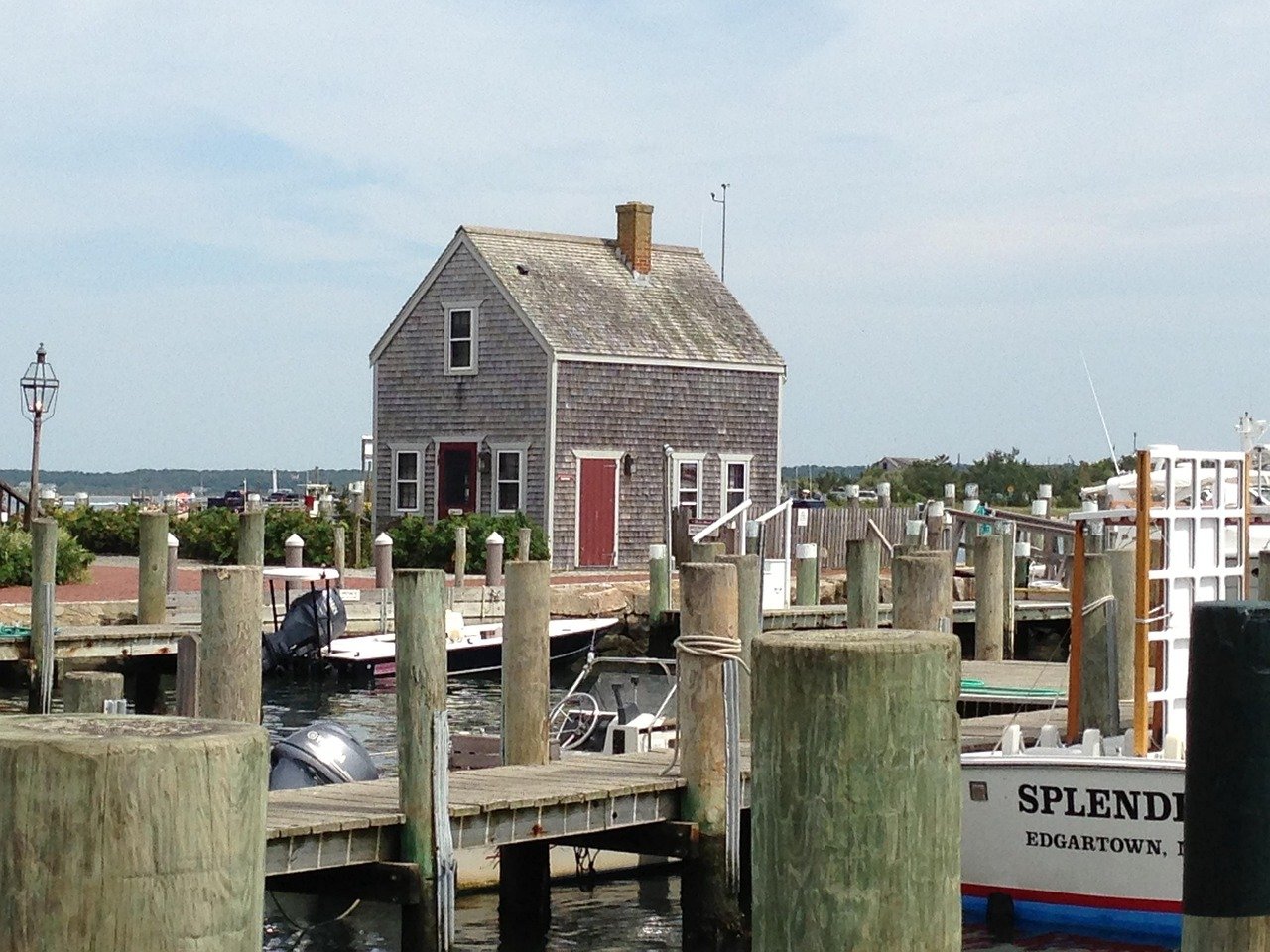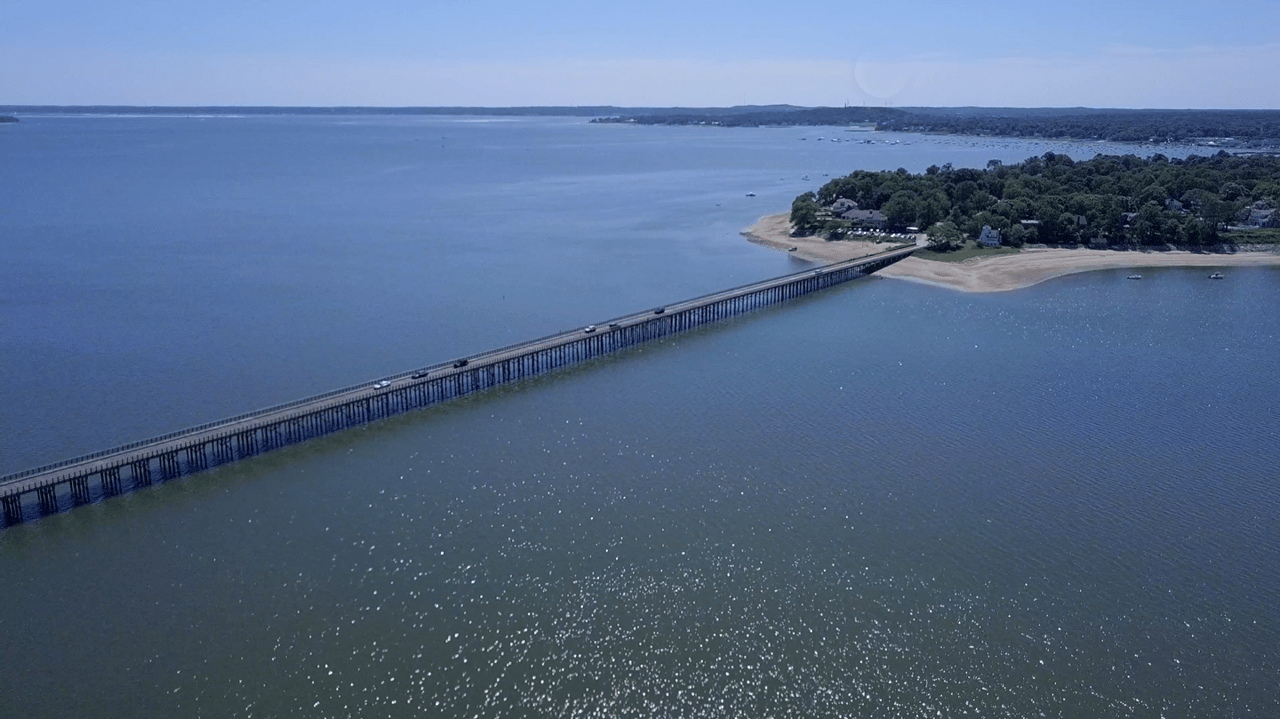
On September 25, 2026, the Federal Highway Administration wrote to Frank Geisel, president of Save Powder Point Bridge, Inc., and ruled that the Powder Point Bridge over Duxbury Bay is "Not Eligible" for the National Register of Historic Places. The ruling agreed with the opinion MassDOT and the Massachusetts Historical Commission reached on November 22, 2024. FHWA also declined to forward the group's appeal to the Keeper of the National Register, the federal official who makes final eligibility calls.
The deciding factor was the bridge's age. The wooden crossing that stars in Duxbury's postcards is not the 1891 bridge. It was built in 1986, after a fire destroyed the original. Most of what happens to the bridge from here follows from that date.
The 1891 bridge burned in 1985
FHWA's letter lays out the history plainly. The original bridge, built in 1891, would have qualified for the National Register. A fire heavily damaged it on June 11, 1985, and an inspection found it was beyond repair. It was demolished, and a new timber bridge replaced it in 1986.
"The new existing (1986) bridge has a different design and construction methodology from the original (1891) structure. It is currently in exceedingly poor engineering condition and is load restricted."
The letter goes on to list later changes, including wrapped piers, added gusset plates and replaced damaged piers. It also cites MassDOT's 2024 inspection report, which found major structural deficiencies in the timber piles. The bridge is posted at a 4-ton weight limit.
The historic test usually begins at 50 years, and the 1986 span turns 40 this year. FHWA also judged that the bridge's design and materials no longer match the structure that earned its reputation. On both counts, the federal reviewers were assessing a 1980s bridge, not a Victorian one.
Why eligibility was the lever that mattered
Historic eligibility was always the route to a wooden outcome that did not depend on local funding. Under Section 106 of the National Historic Preservation Act of 1966, a structure eligible for the National Register gets a different review. Federal agencies must consider a project's effects on it, hear from the public before deciding on a design, and weigh repair and rehabilitation options.
Without that, the state's position governs. In August, Town Manager René Read told the Selectboard that MassDOT had "made it abundantly clear that they won't fund a wooden bridge." The town had once voted to hire a consultant and appeal the original 2024 rejection. Read said that plan was dropped when the money was not available. MassDOT instead worked with the Powder Point Bridge Advisory Committee to get the project "95 percent complete" on what a Section 106 plan would cover.
The September letter closes the main route for now. The questions that remain are about how the new bridge is built and how long the town goes without one.
The openings that remain
FHWA left one door open. Its letter says the material submitted did not show that the bridge meets the federal definition of a "traditional cultural place," meaning a site tied to the community's cultural beliefs, customs or identity. FHWA acknowledged the bridge is "important to the local community and serves as a local landmark," and invited Save Powder Point Bridge to submit more documentation through MassDOT. If that evidence is enough, FHWA said it "would be willing to reconsider and/or go to the Keeper." The group already holds formal consulting party status in the Section 106 process. FHWA granted it on August 18.
In its original filing, the group said it would go directly to the Keeper if FHWA declined to forward the appeal. A group in Chatham did the same over the Mitchell River Bridge after an FHWA rejection. That bridge, though, had pilings more than 50 years old, which is the usual cutoff for historic status. The Powder Point Bridge's 1986 construction date puts it on the other side of that line.
The second open question is structural. Selectboard Vice-Chair Fernando Guitart has said MassDOT's geotechnical scour study could decide what type of bridge the town gets. Scour is erosion of the sediment around a bridge's supports. As Guitart understood MassDOT engineer Marco Pereira's explanation, wood piles can only reach a certain depth, while steel piles can go down to bedrock. Not everyone agrees there is a problem. Pilgrim Byway resident Frank Geisel, who said he holds an ocean engineering degree, told the Selectboard that "no one has ever said there's a scour problem around the bridge," as reported by The Duxbury Clipper. No study results had been posted to MassDOT's project materials page as of this writing.
The third is appearance. FHWA wrote that MassDOT has committed to Context Sensitive Solution design, and that the current renderings "include elements that will enable a new structure to maintain a positive aesthetic incorporating wooden design elements and associated design features that will pay homage to the existing structure." The letter encouraged the group to join that public design process. Short of new cultural-place evidence, that design process is where the bridge's wooden character will be decided.
The calendar from here
These dates come from MassDOT, the Selectboard and the advisory committee.
- May 8, 2026: MassDOT received the 25% design package, according to its project tracker for project No. 612006.
- July 29, 2026: MassDOT held its design public hearing. The flyer described the designs as early and not final. MassDOT's events page now lists no upcoming events.
- October 16, 2026: The Powder Point Bridge Advisory Committee's deadline for the Selectboard, the Town Manager and MassDOT to answer its 36 questions.
- Early 2027: MassDOT plans to put the project out for procurement to line up with programmed federal funding. MassDOT Deputy Administrator Carrie Lavallee wrote that any delay could put that schedule at risk. Chair Amy MacNab has said the town needs to avoid a "point of no return" before procurement.
- Autumn 2027: Construction start, per the MassDOT tracker. The tracker lists an estimated total contract cost of $166,604,000 and no completion date.
The project has followed this pace since MassDOT presented two preliminary design concepts at a February 11, 2026 public meeting. At the Selectboard's September 28 meeting, according to an AI-generated meeting summary, staff gave an update on the FHWA response. Guitart suggested inviting Pereira back to the Selectboard to clarify where the town stands.
Last winter was a short preview
Duxbury has just been through a bridge closure. The Phase IV repair work closed the bridge on December 8, 2025. Beach Operations sent visitors to Duxbury Beach through the Marshfield access leading to Gurnet Road. The bridge reopened to all traffic on Friday, April 3, 2026, after just under four months.
The replacement is a different scale. On August 3, MassDOT's best-case estimate presented to the Selectboard was four and a half years of full closure, with a detour through Cox Corner. That is roughly fourteen times the length of last winter's repair closure. It is also longer than the February estimate of at least three years.
Selectboard Member Mike McGee said the prospect "gives me great pause." He listed lost beach sticker revenue, effects on the Duxbury Beach Reservation, added traffic for residents along Gurnet Road, and businesses that depend on beachgoers. He also named Saquish homeowners and pressure on beach replenishment programs. A resident predicted delays, saying construction with concrete, asphalt and steel cannot happen in winter, according to South Shore News. No official completion date exists. A four-and-a-half-year best case starting in autumn 2027 would run well into the 2030s.
Long-term costs remain uncertain too. The new bridge is expected to last 75 to 100 years, and Selectboard Member Brian Glennon noted that maintenance over that period would fall to the town. MassDOT itemized some of it. Steel pile coatings would need work after 25 to 50 years at $300 to $400 per square foot in current dollars. Expansion joints would need service after about 40 years at $400 per linear foot. Some bearings would need replacement after 40 years at about $25,000. MassDOT has not provided an overall maintenance estimate.
Town opinion is divided. MacNab told the board there is no "overwhelming majority" for either a new span or restoring the wooden one. Support for the replacement rests largely on cost, and support for wood rises when funding seems possible. That interest shows up in the paperwork too. Save Powder Point Bridge, Inc. filed 10 public records requests with the town between August and early September. Read has asked requesters to check the Town Clerk's online portal for records already released. The bridge stayed open on September 20 for Duxbury Rotary's International Day of Peace walk, which crossed on the sidewalk.
The scour study, any new cultural-place submission and the answers due October 16 are the next items to watch. Each one affects the design or the schedule, since federal eligibility is now settled.
If you own a home on Powder Point, along Gurnet Road or on Saquish and want to think through how a multi-year closure fits your plans, Matthew Winterle is based in Duxbury and is following each step of the project.
This article is general information, not legal, tax or financial advice. Consult a qualified professional about your situation.